
-
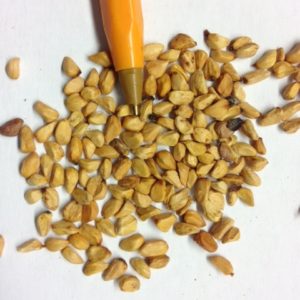
Dog Rose Seed
Rosa canina£5.00 inc. VATThe Dog Rose is a hedgerow shrub with an open growth habit and long, arching, prickly stems. It is often used in reclamation planting and for land stabilisation. In early summer it produces large scented flowers that vary from pink through to white. The rosehips are egg shaped and bright red providing autumn colour and food for wildlife. Packed with vitamin C , the hips in the form of a tea have been used to treat kidney problems. The national flower of Romania
-
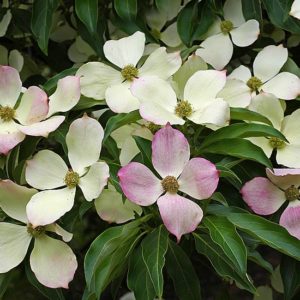
Eastern / Flowering Dogwood Seed
Cornus florida£7.00 inc. VATEastern / Flowering Dogwood is a large shrub or small tree. In winter the flower buds are enclosed in 4 white bracts which open in spring; the bracts form “petals” which are tinged pink at the apex forming a very pretty “flower.”
-
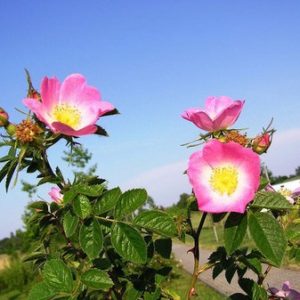
Eglantine / Sweet Briar Seed
Rosa rubiginosa / eglanteria£5.00 inc. VATThe Eglantine Rose is a medium sized, dense, spiney deciduous shrub with aromatic leaves, smelling of apples. The single pink flowers are simple, beautiful and fragrant. Bright red oval hips persist well into the winter and are a good source of Vitamin C. In some countries (New Zealand, South Africa and Australia) it is seen as an invasive weed, but in UK there are no problems with it. Prune in autumn or winter and it can be sheared back quite hard if necessary.
-
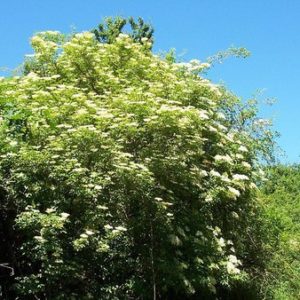
Elderberry / Common Elder Seed
Sambucus nigra£6.00 inc. VATElderberry is a large shrub or small tree with rugged bark and 5 to 7 leaflets. The leaves smell a bit odd. It bears flattened heads of white flowers in early summer which give rise to dense bunches of small black fruits. The fruit famously makes a good wine or can be used to flavour gin. The flowers are used to make cordial or champagne. It grows well on chalk and is being harvested commercially for both flowers and berries. Common in larger hedges and wood margins. It is excellent for wildlife – insects on the flowers and birds for the berries.
-
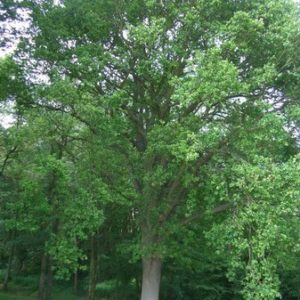
English Oak / Common Oak Seed
Quercus roburPrice range: £7.00 through £12.00 inc. VATThe English Oak makes a large, impressive, long lived tree, an icon of the British countryside! It develops a large head of rugged branches. The deciduous leaves are stalkless, auricled at the base with shallow lobes and turn a good yellow and copper in the autumn. The acorn fruits are attached to the tree by a slender stalk. It plays host to masses of wildlife that depend on it. The auricles are one of the ways of distinguishing between English Oak and Sessile Oak.
Not for forestry purposes.
-
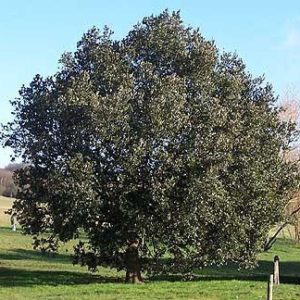
Evergreen / Holm Oak Seed
Quercus ilexPrice range: £6.00 through £15.00 inc. VATThe Holm Oak is a large evergreen tree with an attractive corrugated bark. The leaves are a dark glossy green not unlike holly but vary in shape and size. It can become deciduous in the very coldest areas but is an excellent tree for coastal areas.
Not for forestry purposes.
-
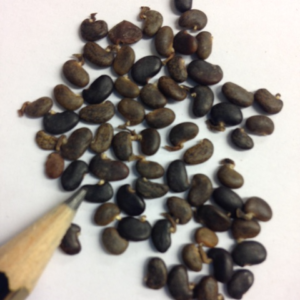
False Acacia / Black Locust Tree Seed
Robinia pseudoacacia£5.00 inc. VATRobinia or False Acacia grows to be a large suckering tree with furrowed bark. The fragrant white flowers have a yellow base to the petal and attract bees in the early summer, Acacia honey is well known and very tasty! The tree has been used to stop soil erosion because of its tendency to sucker and the timber is also useful. Being leguminous means that the roots ‘fix’ nitrogen from the air into the soil which is a useful trait, helping soil nutrition
Not for forestry purposes.
-
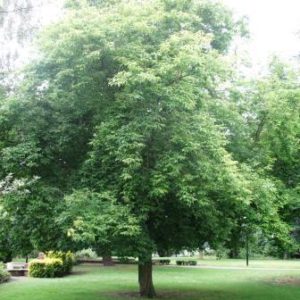
Field Maple Seed
Acer campestre£5.00 inc. VATField Maple is a pretty, medium sized deciduous tree often seen forming parts of hedgerows although it makes a good small specimen tree too. The five-lobed leaves turn bright yellow in autumn and may be flushed red. The miniature sycamore-type winged seed are quite often pink too, before they ripen. When young this tree will tolerate quite deep shade, but requires more light to flower and fruit. Insect friendly
-
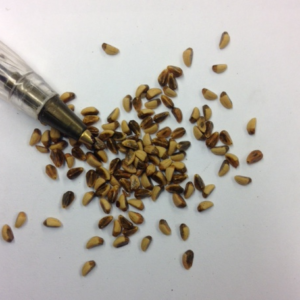
Firethorn Seed
Pyracantha coccinea£5.00 inc. VATFirethorn or Pyracantha is a large evergreen shrub that is valued for its outstanding display of red autumn berries. These are produced from the white flowers that appear in spring. Its dark green leaves are augmented by sharp thorns which when used as a boundary plant provide an effective security barrier.
-
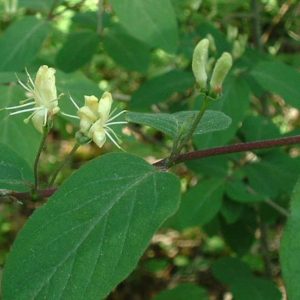
Fly Honeysuckle Seed
Lonicera xylosteum£5.00 inc. VATFly Honeysuckle is a small to medium sized deciduous shrub with grey/blue-green foliage and untidy habit. Its flowers are not as showy as other honeysuckles, being a creamy white and flowering for 2 weeks in late spring. It is however pollution tolerant and produces red poisonous fruits later in the year. Although native to Eurasia, it is naturalised in most of America.
-
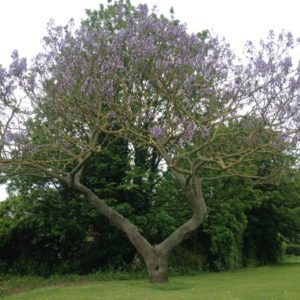
Foxglove Tree Seed
Paulownia tomentosaPrice range: £5.00 through £16.00 inc. VATAn exotic looking tree that, in suitable positions, produces panicles of foxglove-like purple flowers. They appear in the spring before the leaves. The deciduous leaves are large and hairy and can grow huge if the tree is pollarded, (branches cut back to the main stem) every couple of years. A really fast growing tree and in America and Asia is used for timber production. An old tradition in China is to sow a Paulownia seed when a girl is born and to chop the tree down when she marries, using the timber to make furniture for the newly-weds!
-
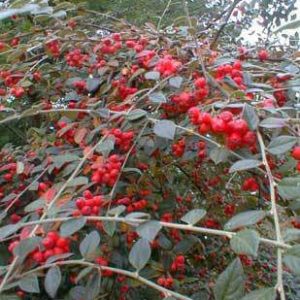
Franchet’s Cotoneaster Seed
Cotoneaster franchetii£7.00 inc. VATFranchet’s Cotoneaster is a popular semi-evergreen shrub that is graceful and medium sized with sage green foliage. The white flowers blushed with pink give rise to ovoid scarlet-orange fruits. Soft relaxed growth can be pruned in to shape.
-
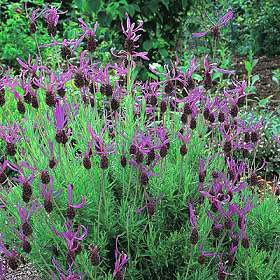
French Lavender Seed
Lavandula stoechasPrice range: £5.00 through £10.00 inc. VATFrench Lavender is an intensely aromatic shrublet with narrow grey leaves. The dark purple flowers are borne in dense terminal heads which are topped by prominent purple bracts, very attractive to bees. Plants require a warm sunny position and are often used as a low, informal hedge which needs to be lightly trimmed after flowering. It has a more acid scent than English Lavender
-
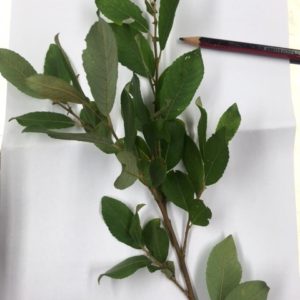
Goat Willow Seed
Salix caprea£6.00 inc. VATGoat or Pussy Willow is more an upright, deciduous shrub than tree. One of the commonest and most tolerant of our native trees. It is quite often a tough pioneer of inhospitable damp sites and thrives on poor soil. Early in spring the male flowers appear – the soft, silky, silver hairy buds which give rise to the name ‘Pussy Willow’. These turn into fluffy balls of pollen. Female flowers, on separate trees, are long green catkins that erupt into white fluff surrounding the seed in May or June. The leaf is very variable.
-
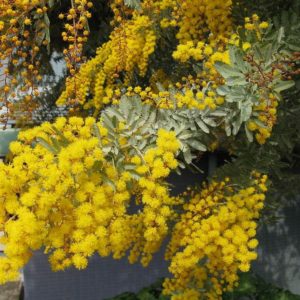
Golden Mimosa Seed
Acacia baileyanaPrice range: £6.00 through £26.00 inc. VATGolden Acacia or Cootamundra Wattle is a small evergreen tree/large shrub with silver grey ferny leaves and short spikes of pompom flowers between Dec and March. Lots of Pollen is produced so the tree is good for early insects. In fact it is planted for honey production commercially as well as for floristry. However, in warmer countries it tends to escape and be a bit of a plague in the wild. In the UK, it definitely needs to be in a conservatory or very sheltered sunny corner. Quite tolerant of drought.
-
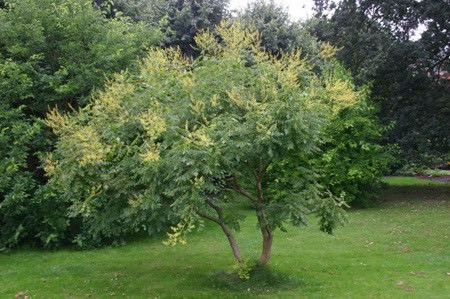
Golden Rain Tree / Pride of India Seed
Koelreuteria paniculata£5.00 inc. VATThe Golden Rain Tree is a broad headed deciduous tree up to 12m high with pinnate leaves made up of 9 to 15 leaflets. In mid to late summer it produces small yellow flowers on large panicles which give rise to the air filled bladder like fruits containing the seed. In autumn these decorative bladders can turn from yellow to pink and then brown and are almost more ornamental then the flowers!
small pic courtesy of Gerd Eichmann / CC BY-SA
-
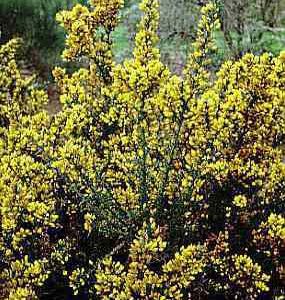
Gorse Seed
Ulex europaeusPrice range: £5.00 through £10.00 inc. VATGorse is a dense fiercely spiny shrub. In mild areas the yellow, pea-like flowers, smelling of coconut, are produced throughout the year but more usually they flower from March through to May. Brilliant for insects. The shrubs thrive on, and prefer, very poor light or stony soils. They can act as good pioneers, nursing other less tough plants until they’re big enough to survive. No maintenance necessary, but can be pruned quite hard (using armoured gloves!)
-
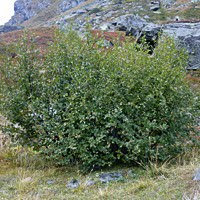
Green Alder Seed
Alnus viridisPrice range: £5.00 through £9.00 inc. VATThis is a deciduous short lived shrub, but can become a small tree. Unlike other Alder species, long yellow catkins (up to 10cm) are borne in April when the tree is already in leaf. It has a smooth grey bark with shiny green leaves. Sometimes it is used as a nurse crop for timber trees since it doesn’t grow too big and compete. It also fixes nitrogen from the air. Often found growing with Willows it is usually one of the first to colonize scree.
-
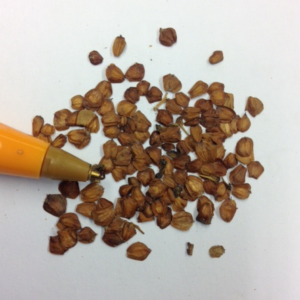
Grey Alder Seed
Alnus incanaPrice range: £5.00 through £10.00 inc. VATGrey Alder is an ideal small tree or bush for cold and wet situations. This very hardy tree has grey undersides to its leaves with yellowish brown catkins which are borne in late winter. The leaves are pointed at the end which makes it easier to distinguish between this and A. glutinosa. It has root nodules, as with other Alders, that fix nitrogen from the air and therefore helps with soil fertility – good for sites that need pioneers.
Not for forestry purposes.
-
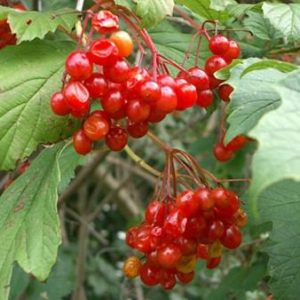
Guelder / Guilder Rose Seed
Viburnum opulus£5.00 inc. VATGuelder Rose is a large vigorous shrub with 5 lobed maple like leaves which colour well in autumn. It produces flattened clusters of white flowers, (a bit like hydrangea flowers), in summer followed by red translucent fruits in the autumn, beloved of winter migrant birds. Can be pruned/trimmed in winter, quite hard. This is one of the prettiest seeds around – they are heart-shaped and various shades of pink!
-
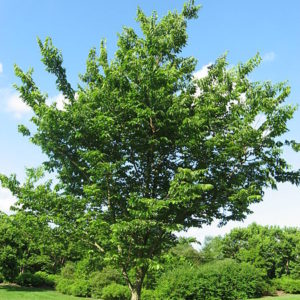
Hackberry Seed
Celtis occidentalis£5.00 inc. VATHackberry is a deciduous tree although it can be evergreen in very warm climates. It has a deeply fissured corky bark. In the UK it rarely produces its black fruits.
-
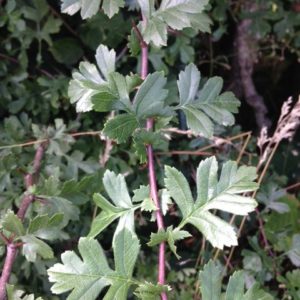
Hawthorn Seed
Crataegus monogyna£5.00 inc. VATHawthorn is a British native hedging plant. It produces a spectacular profusion of flowers in late spring which are visited by all sorts of different insects. There are red-brown fruits (haws) in the autumn. Hawthorn can make a large shrub or a small tree. It is also known as May or Quickthorn and is surrounded by superstition and folklaw. It is associated with May-Day and other spring festivals. Even in Anglo-Saxon times it was used to mark boundaries and it is one of the most common hedgerow trees, being amenable to chopping, laying, flail mowing etc
The 2nd small picture shows unusual hawthorn topiary at Bryan’s Ground Garden in Hereford and 3rd pic is seed being stratified in our fridges, mixed with damp peat.
-
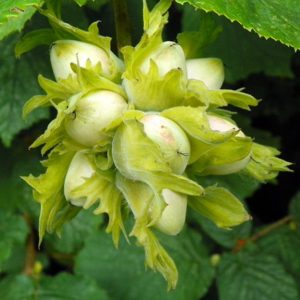
Hazel / European Hazel / Cobnut
Corylus avellana£7.00 inc. VATHazel is a large shrub or small multiple stemmed tree that produces delicate, yellow, long female catkins called lambs tails in late winter. Visited by very early insects It is used in large gardens as a shrub for screening. It produces the edible hazelnut. Every 8-10 years the long stems that have grown can be chopped down to very near ground level and the crown will start to grow again. This is Coppicing(pic is a mature coppice in Ireland)and is great for wildlife, since it provides dappled shade and open spaces. The resultant timber can be used for baskets, chairs, burning, turning and weaving into fences. Commercially selected varieties are grown for nuts in Kent, but also in Turkey for chocolate and chocolate spread manufacture (no names mentioned, ambassador!)
-
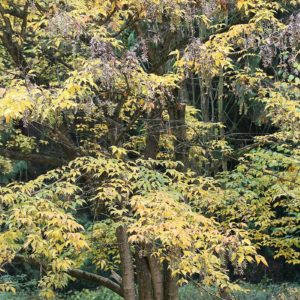
Henry’s Maple Seed
Acer henryi£5.00 inc. VATHenry’s Maple is a rare, small deciduous tree, often multi-stemmed when mature. It grows a wide, flatish crown and striated bark. The trifoliate leaves have fine red stems, hairy veins and good autumn colours of red, yellow and orange. Native of China, it was introduced to UK in 1903, but is still rarely grown. It is an excellent tree for smaller gardens since it casts only light shade and doesn’t grow too tall.

Sign up to receive great news and offers