
-
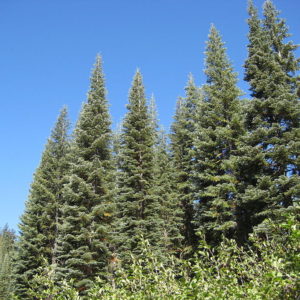
Red Fir Seed
Abies magnificaPrice range: £7.00 through £26.00 inc. VATRed Fir forms the great conifer forests of the Sierra Nevada of California. It has long blue-green needles and purple cones of up to 20 cm long. The bark turns red as the tree ages. Mature trees grow into a slim conical shape. Closely related to Noble Fir but it doesn’t have a groove down the centre of the needle and the needles are less densely packed along the branch. Used for timber, pulp and Christmas trees
PIC COURTESY OF Tyler Karaszewski from Alameda, CA, USA, CC BY 2.0 via Wikimedia Commons
-
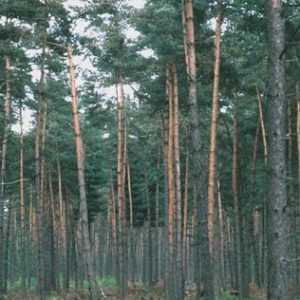
Scots Pine Seed
Pinus sylvestrisPrice range: £5.00 through £20.00 inc. VATScots Pine is the only pine native to Britain and is easily recognised by its attractive reddish bark. It’s needles grow in pairs and are quite long when the tree is young and fast growing, but become shorter growing with age. It has a conical growth habit when young, making it popular for Bonsai production and increasingly for use as a Christmas tree. When mature the tree makes a wonderful architectural shape. Once extensively covering land in Scotland, there are now only a few remaining ancient Caledonian Forests due to the iconic Scots Pine being used as a timber tree. Conservation bodies and landowners are trying to rectify this. (Trees for Life)
Not for forestry purposes.
-
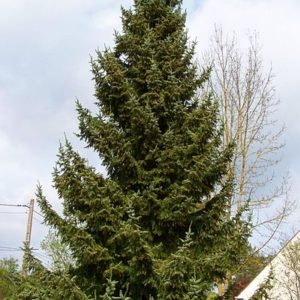
Serbian Spruce Seed
Picea omorikaPrice range: £5.00 through £24.50 inc. VATSerbian Spruce is a very adaptable spruce which quickly forms a tall slender tree with short drooping branches and dark green/grey needle leaves, with blue undersides. It is sometimes used as a Christmas Tree, but the needles are very prickly and sharp. Makes a good barrier when young and a lovely specimen tree on maturity. Dark purple cones turn brown as they ripen.
pic courtesy of UBothFr91, CC BY-SA 4.0 <https://creativecommons.org/licenses/by-sa/4.0>, via Wikimedia Commons
-

Shortleaf Pine Seed
Pinus echinataPrice range: £6.00 through £30.00 inc. VATThe tree has very strong roots, and thus it is able to withstand high winds; additionally, the tree can survive in very dry conditions. The roots are able to reach great depths to search for water. It is believed the roots are this long due to the wide range of the species that consequently experiences varying climate
Shortleaf pine can be found in a variety of soils including, stiff clay, gravel, and sand. Although the species is not soil-specific, they do not thrive in wet or very poorly drained conditions
-
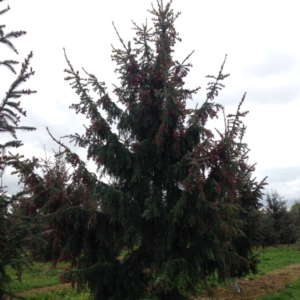
Sitka Spruce Seed
Picea sitchensisPrice range: £5.00 through £15.00 inc. VATSitka Spruce is probably one of the most important species of conifer from an economic viewpoint. It thrives on damp sites and poor soils. Used extensively for timber and pulp production, but also can be used for Christmas trees. Picture shows an enormous tree in the Benmore Botanic Gardens, near Dunoon(www.rbge.org.uk/visit/benmore-botanic-garden). Sitka can be used as a relaxed hedge – just chop out the leader and it will bush out to make a prickly barrier.
Not for forestry purposes.
-
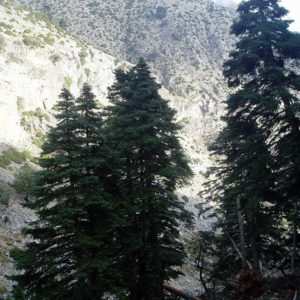
Spanish Fir Seed
Abies pinsapoPrice range: £5.00 through £12.00 inc. VATSpanish Fir is the National Tree of Andalucia and is now endangered. Narrowly conical in shape with stubby, evergreen grey-green needles giving an ornamental blue-ish appearance from afar. The smaller picture shows one of the few remaining Pinsapo ‘forests’ in the mountains of southern Spain nature reserve area(Grazalema). The trees grow in pockets of soil on the mountainsides. In the valleys are nurseries which are growing trees for replanting into the wild. The nature reserve also holds wild Narcissus and Crocus species.
Not for forestry purposes.
-
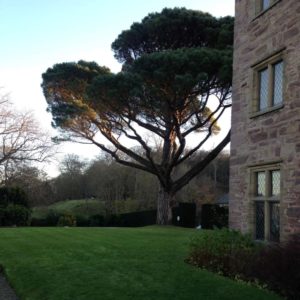
Stone Pine Seed
Pinus pineaPrice range: £7.00 through £11.00 inc. VATStone Pine is the conifer that is exploited for its edible pine nut/seed(think Pesto and Italian Cuisine), It has a short trunk and an umbrella-like growth habit, giving mature trees a flat crown. It has attractive glaucous blue-green leaves in younger specimens and is sometimes sold as a pot grown mini Christmas tree. It is the classic flat-topped pine tree of Italy.
Not for forestry purposes.
-
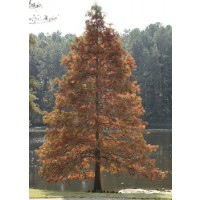
Swamp Cypress Seed
Taxodium distichumPrice range: £5.00 through £10.00 inc. VATThe Swamp Cypress is an ideal conifer for wet soils. It is the dominant tree in the everglades of Florida and introduced to the UK in the mid 1600s. In the autumn, the soft leaflets fade to a beautiful bronze and then brown in autumn before dropping – a rare deciduous conifer. This tree is easy to confuse with Metasequoia(Dawn Redwood), but Taxodium has branches and leaflets arranged alternately, whereas Metasequoia has them arranged in pairs, opposite each other. The bark is stringy and shaggy and mature trees in wet areas grow ‘knees’ or odd bits of trunk erupting from the ground round the main trunk (pneumatophores). Despite its name, it doesn’t necessarily need to be planted in a wet place.
-
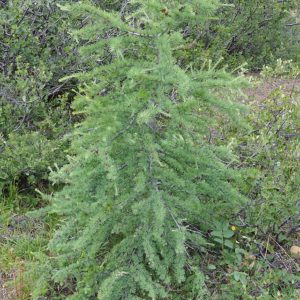
Tamarack Seed
Larix laricinaPrice range: £5.00 through £18.00 inc. VATThis American Larch is deciduous, like others and grows to be a tall columnar tree. It has pinkish orange to dark red bark becoming scaly when old. Needles are spirally arranged on long shoots. Before needle drop in autumn they turn orange. It’s widely distributed in North America, in swampy boreal forests and is very hardy and tolerant.
-
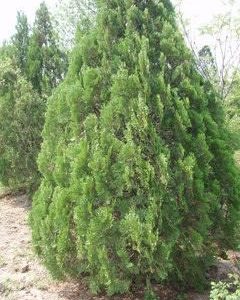
Tree of Life or Chinese Arborvitae Seed
Thuja orientalis£6.50 inc. VATThe Tree of Life or Chinese Arborvitae is a small slow growing conifer that is often grown as an ornamental. It makes a close, even, broad conical shape. In its native China it is associated with long life and vitality – hence its name of Chinese Arborvitae or Tree of Life. It is often planted in cemeteries and graveyards in UK. Foliage fronds are made up of flat scale-like leaves which are citrus aromatic when crushed and in a hard winter turn brownish green. The timber is quite pale and easy to work, being soft.
Pic by Fanghong, CC BY-SA 3.0 , via Wikimedia Commons
-
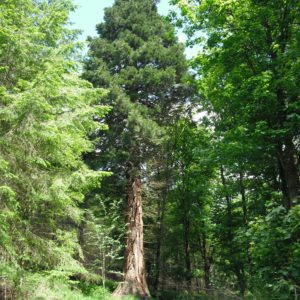
Wellingtonia Seed
Sequoiadendron giganteumPrice range: £5.00 through £15.00 inc. VATWellingtonia is a Californian giant, not as tall, but with a wider girth than the Californian Redwood (Sequoia sempervirens) Young specimens are conical and densely branched producing a large elegant evergreen tree. The leaves are similar to Leyland cypress, being shortish hard scales. Thick rusty coloured fibrous bark, fissured and ridged when mature, but very soft.
-
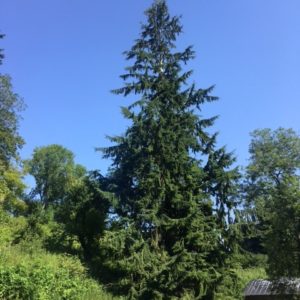
Western Hemlock Seed
Tsuga heterophyllaPrice range: £5.00 through £18.00 inc. VATWestern Hemlock is a large fast growing conifer with spreading branches. It produces an outstandingly beautiful single specimen tree with an elegant spire-like crown. The leaves are marked with two white bands underneath, soft and a bit like Yew but are aromatic(grapefruit or citrus) when crushed. Associated with Douglas Firs and Sitka Spruce on the Pacific coast of America, growing in the shade of other trees. When young, growth is slow, but picks up after 2 or 3 years.
-
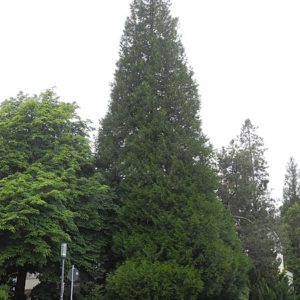
Western Red Cedar Seed
Thuja plicataPrice range: £5.00 through £16.50 inc. VATWestern Red Cedar is a large fast growing tree with shredding bark and spreading branches. The leaves are bright glossy green forming an excellent hedge which clips well. Foliage is aromatic. Trees are grown commercially for cutting into planks for cladding and fencing and shingles. The timber is very resinous so doesn’t rot.
pic courtesy of Baummapper, CC BY-SA 3.0 , via Wikimedia Commons
-
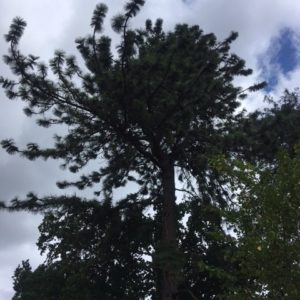
Western Yellow Pine Seed
Pinus ponderosaPrice range: £7.00 through £18.00 inc. VATWestern Yellow Pine is a large striking conifer with a scaly cinnamon bark and drooping branches. Planted as an ornamental tree in large gardens as well as for timber production in its native western North America. Needles grow in threes and even when old the crown is narrowly conical. The bark is said to smell of turpentine, but not as strongly as Pinus jeffreyii.
-
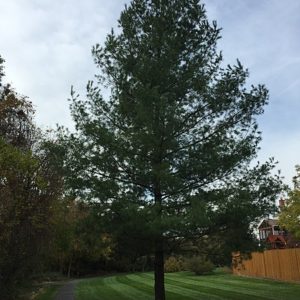
White / Weymouth Pine Seed
Pinus strobusPrice range: £5.00 through £14.00 inc. VATWhite or Weymouth Pine is usually planted in gardens and parks as a specimen tree. It has very short dark green needles, in bundles of 5 and the cones are slender and brown up to 15cm long. It is fast growing and ornamental. In the past it has been used as a timber tree, and still is in America. It was used for the masts of sailing ships and was the cause of The Pine Riots in the American Civil War, because the colonists objected to the export of the finest trees to England! (early trade wars?!) Called the Weymouth Pine after Captain Weymouth who first brought the seed back the England, not because of where it grows!
pic courtesy of Famartin, CC BY-SA 4.0 , via Wikimedia Commons
-
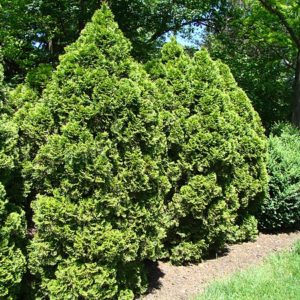
White Cedar Seed
Thuja occidentalisPrice range: £5.00 through £10.00 inc. VATThis is an extremely hardy evergreen forming a medium sized columnar tree or hedge. It has spreading branches that curve upwards at the tip with dark green upper surface foliage; the lower surface being a light yellow. Foliage smells of cooked apples with spices. Brought over from America in about 1540.
pic courtesy of Dan Keck from Ohio, CC0, (public domain)via Wikimedia Commons
-
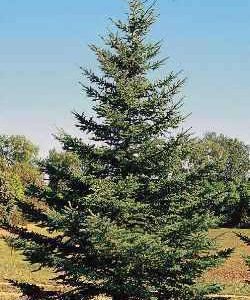
White Spruce Seed
Picea glaucaPrice range: £5.00 through £20.00 inc. VATWhite Spruce is a very hardy species and quite variable. Stubby needles are densely packed and on some trees are green and some blueish grey and anything in between. It has a narrowly conical growth habit when mature, with branches that ascend at the tip. In Canada it is an important timber tree for building and pulp and in Japan the wood is used for making boards for the game ‘Go’
pic courtesy of USDA-NRCS PLANTS Database / Herman, D.E. et al. 1996. North Dakota tree handbook. USDA NRCS ND State Soil Conservation Committee; NDSU Extension and Western Area Power Admin., Bismarck, ND., Public domain, via Wikimedia Commons

Sign up to receive great news and offers